Hundreds of genetic conditions & mutations have been reported in association with increased NT.

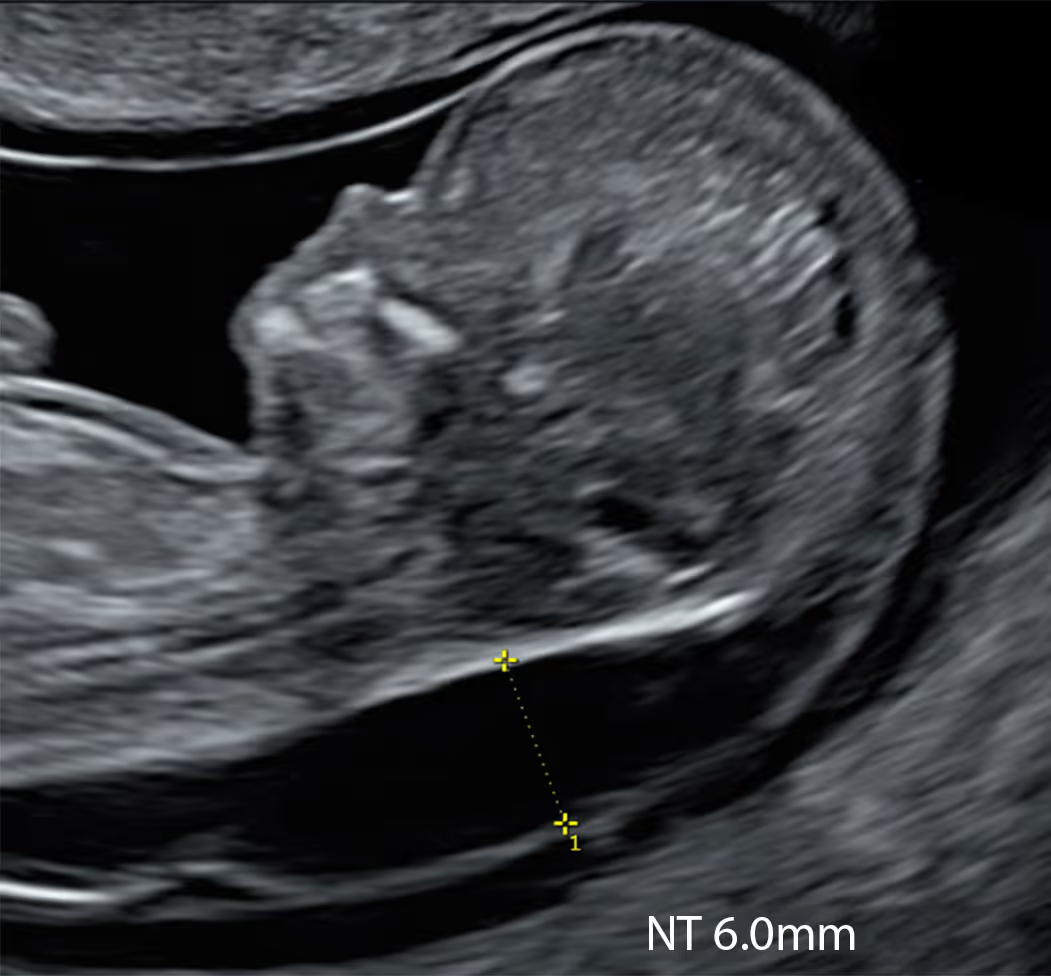
Many people, including some medical professionals, still believe that NT is a marker only for trisomy 21 (Down syndrome). This is a common misconception.
In fact, there are more than 3,000 scientific publications describing associations between increased NT and a wide range of genetic conditions and pathogenic gene variants. Surprisingly, this information has never been fully systematised.
We have undertaken extensive work to compile and organise this comprehensive registry of conditions and relevant genetic variants. The registry currently includes approximately 650 conditions and gene variants (mutations). We have chosen not to exclude certain duplications, as these may reflect important genotype–phenotype interactions associated with increased NT. Some conditions are associated with multiple genes, while a single gene may also be linked to several distinct genetic syndromes.
Overall, we have identified around 300 individual genetic variants associated with the increased NT phenotype.
We recognise that the registry is not yet exhaustive and will continue to be reviewed, updated, and expanded on a regular basis. If you are aware of a condition or gene variant that is not currently included, please contact us with the relevant reference. We would be pleased to review it for inclusion.
Please note: this registry focuses on genetic causes and does not include structural, non-genetic conditions associated with increased NT, such as heart defects or VACTERL syndrome.
Increased nuchal translucency (NT) can be linked to a wide range of genetic abnormalities, which can be broadly divided into several main groups:
Together, these categories account for hundreds of distinct conditions associated with increased NT, reflecting the wide genetic diversity underlying this ultrasound finding.
Commonest single-gene (monogenic) disorders associated with increased nuchal translucency (NT):
Disclaimer! These reflections are my own and arise from practice rather than committee. They do not represent the positions of the FMF, UCLH, NHS, RCOG, ISUOG, or any other organisation. As with any clinician, I may make mistakes or misjudgements. But I believe that coupling a careful 10 Week Scan with modern NIPT, and escalating to targeted diagnostics when indicated, offers families the balance we seek: early clarity without haste, and precision without noise.
For medical professionals who want to learn more about the SMART NT approach, access training, and join our clinical network.


Lorem ipsum dolor sit amet conse ctetur adip iscing elit justo quis odio sit sit ac port titor sit males dolor sit consectur dolor.

Lorem ipsum dolor sit amet conse ctetur adip iscing elit justo quis odio sit sit ac port titor sit males dolor sit consectur dolor.

Lorem ipsum dolor sit amet conse ctetur adip iscing elit justo quis odio sit sit ac port titor sit males dolor sit consectur dolor.

Lorem ipsum dolor sit amet conse ctetur adip iscing elit justo quis odio sit sit ac port titor sit males dolor sit consectur dolor.

Lorem ipsum dolor sit amet conse ctetur adip iscing elit justo quis odio sit sit ac port titor sit males dolor sit consectur dolor.

Lorem ipsum dolor sit amet conse ctetur adip iscing elit justo quis odio sit sit ac port titor sit males dolor sit consectur dolor.


